Insights for Connected Enterprise Intelligence
Practical perspectives from the CONSOLYX team on enterprise operations, financial consolidation and close, FP&A and scenario planning, sustainability and GRC, and workforce intelligence. Explore articles, case studies and briefings on how multi-entity organisations connect operations, finance and reporting into one governed view, and decide with confidence.

The Enterprise Visibility Gap; Why More Systems Create More Reconciliation, More Control Effort and Slower Decisions
Capable ERP, payroll, planning, analytics, sustainability and risk applications can still leave management with a fragmented enterprise view. Explore the hidden reconciliation, control and governance effort between them, and why connected enterprise intelligence matters.
Read the Guide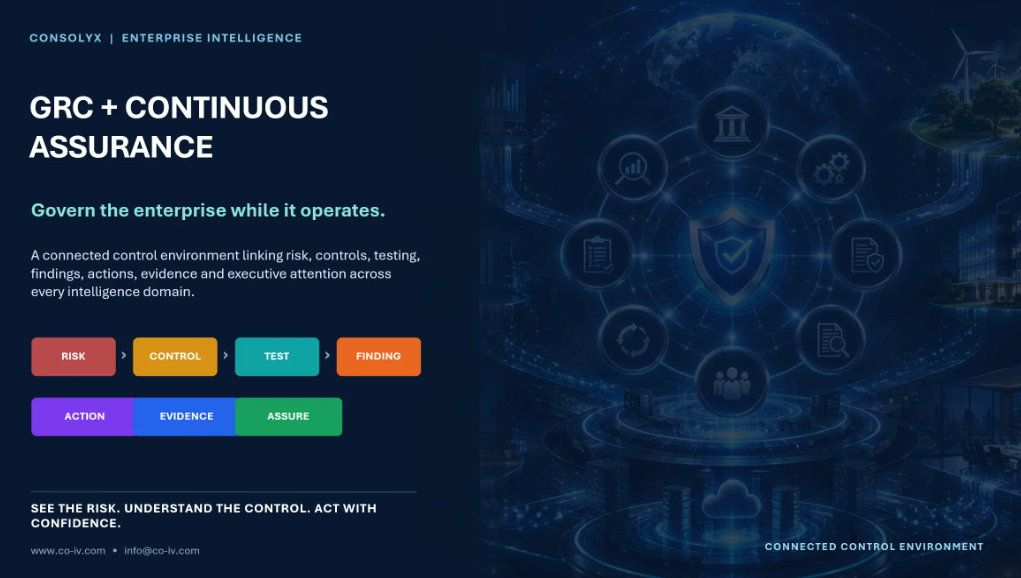
Enterprise GRC and Continuous Assurance:
From Risk Registers to Real-Time Control Intelligence A large-enterprise operating model for connected risk, controls, evidence and executive decision-making
Read the Guide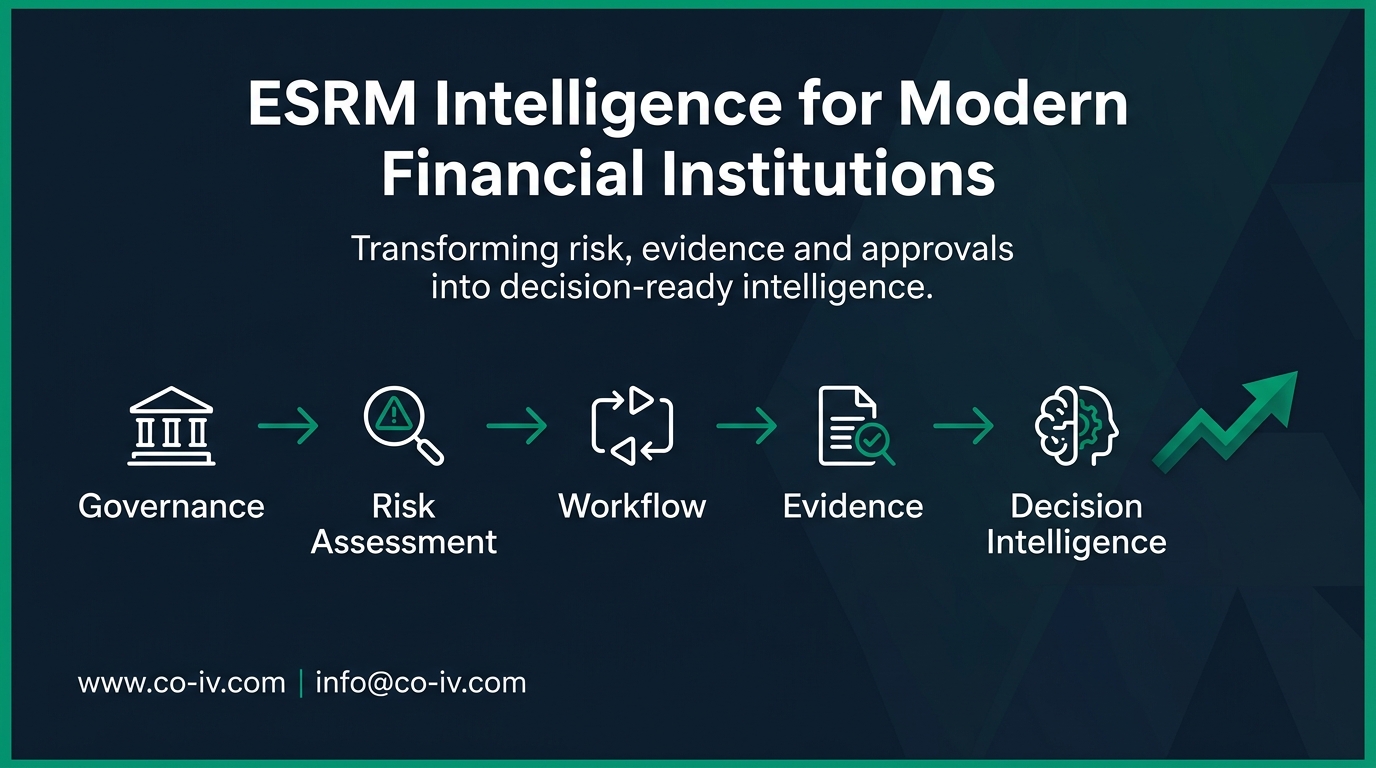
ESRM Software for Banks: From Manual Processes to Governed Risk Intelligence
How CONSOLYX connects environmental and social due diligence, risk decisions, approvals, evidence, monitoring and reporting within one controlled operating environment.
Read the Guide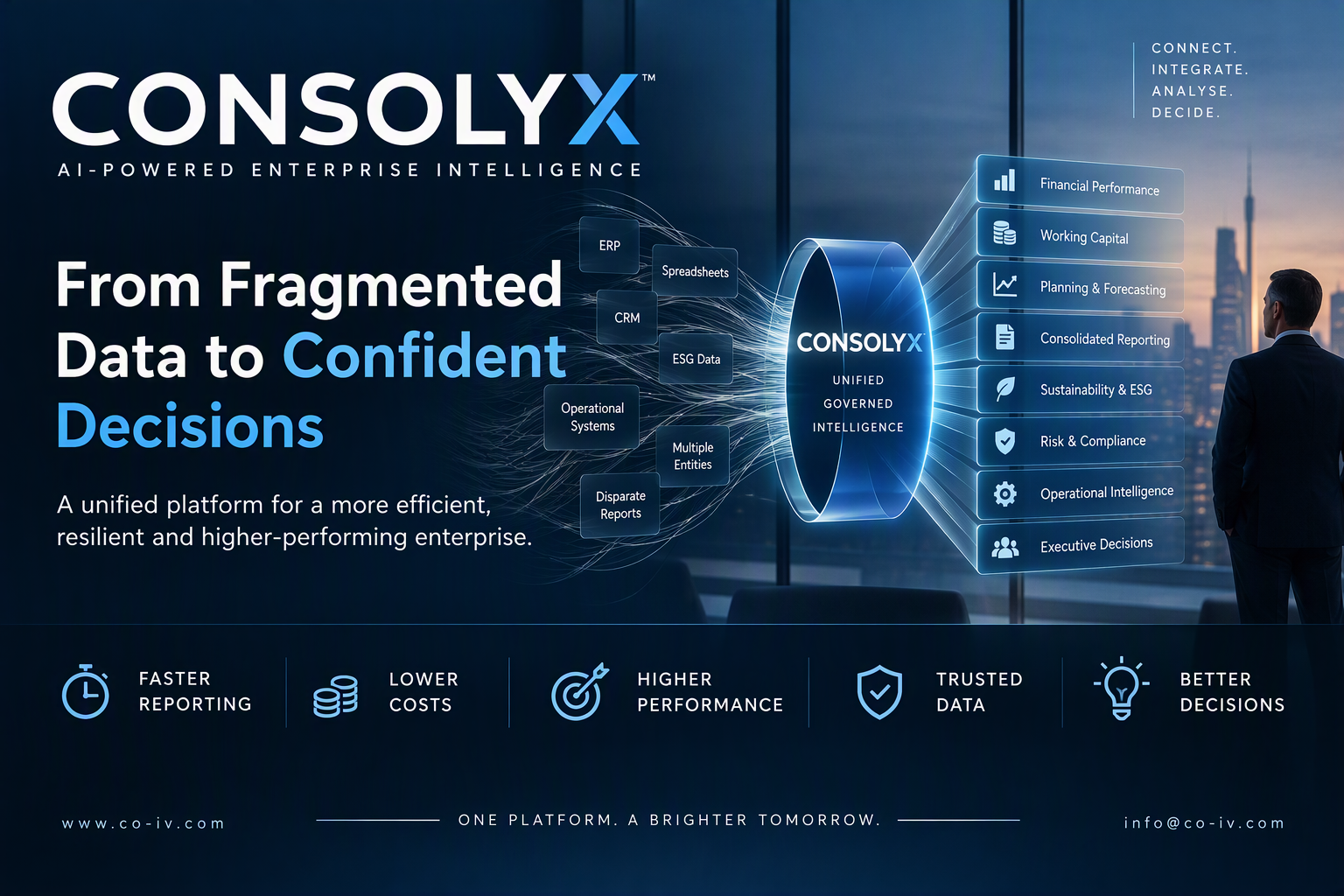
AI-Powered Enterprise Intelligence: The End of Fragmented Decision-Making
How a unified enterprise intelligence platform helps Group CFOs, CEOs and boards accelerate reporting, strengthen cost control and make faster, evidence-based decisions.
Read the Guide
How a Multi-Entity Malaysian Holding Group Centralized Carbon Accounting, ESG Performance and Sustainability Reporting Across Multiple Entities
From fragmented spreadsheets and disconnected reporting processes to enterprise-wide Sustainability Intelligence, Carbon Intelligence and Climate Governance.
Read the Guide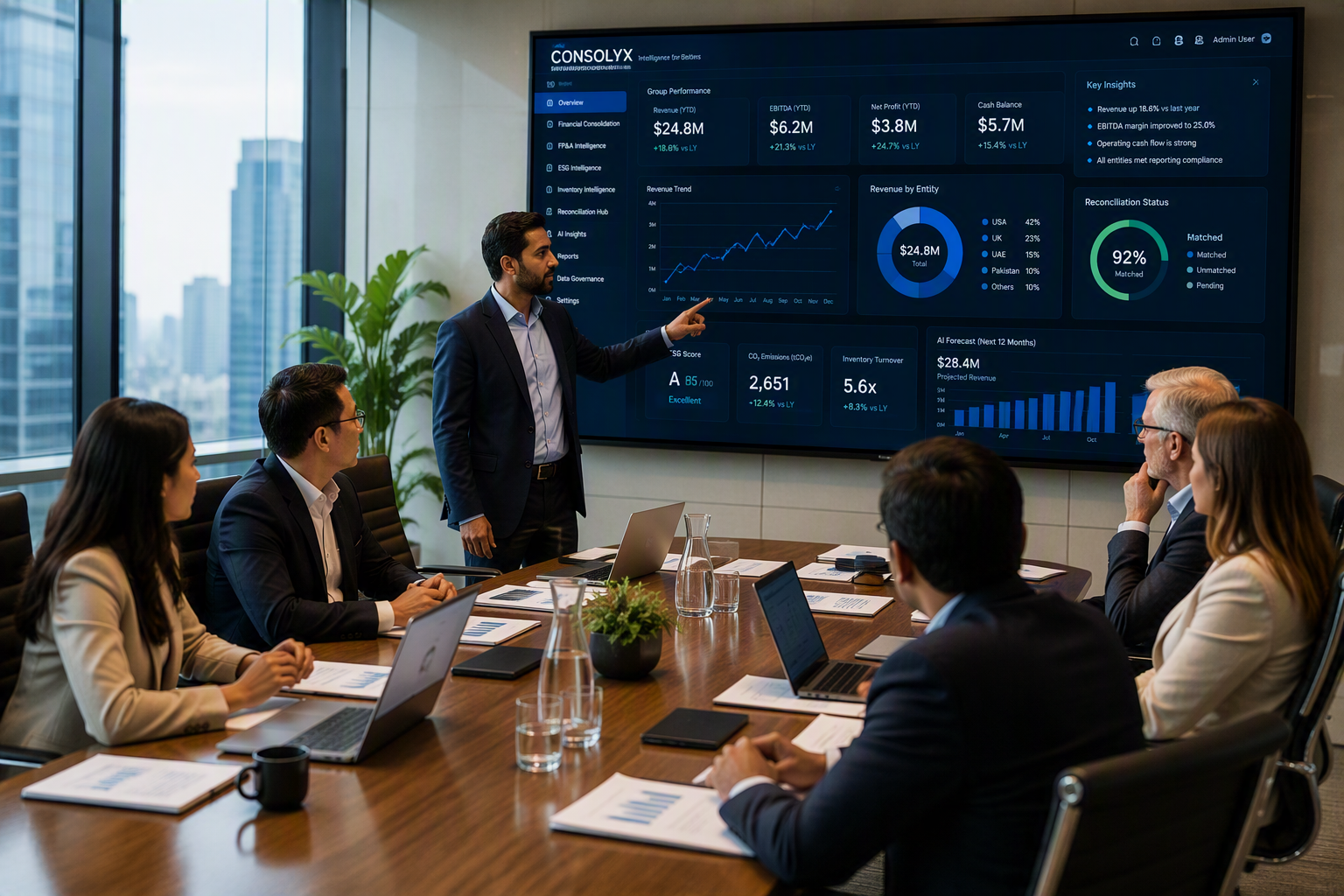
ERP Is Not the End of Transformation: Building Intelligence Beyond Transactions
An ERP goes live, transactions begin to flow, and the implementation team marks a major milestone. Then month-end arrives. Finance closes the books, but dashboard totals do not agree with the trial balance. Consolidation still takes place outside the system. Board reporting depends on late Excel extracts, while managers debate which version is correct.
Read the Guide
UAE-Based Holding Group Transforms FP&A, Consolidation and Enterprise Reporting Intelligence.
How CONSOLYX enabled connected planning, multi-entity consolidation, driver-based forecasting and executive decision intelligence across 21 entities, 6 countries and 7 currencies.
Read the Guide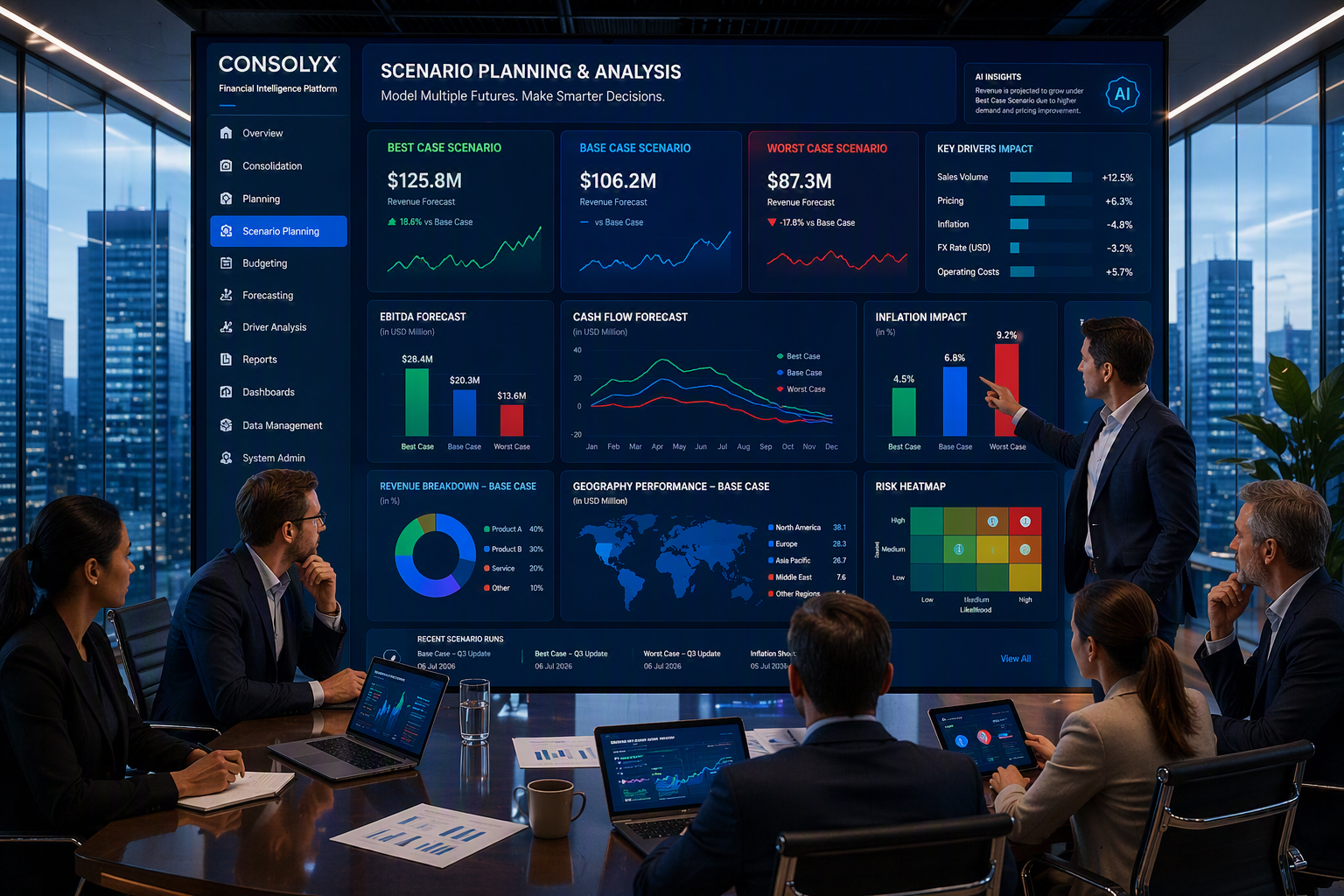
The CFO's Guide to Scenario Planning During Economic Uncertainty: Building Resilience, Protecting Performance, and Driving Growth
Economic uncertainty has become a permanent feature of modern business. From inflation and currency fluctuations to geopolitical risks and changing customer demand, finance leaders must prepare for multiple possible futures. This guide explores how CFOs can use scenario planning, financial forecasting, and data-driven decision-making to improve resilience, manage risk, and support sustainable growth in a rapidly changing environment.
Read the Guide
Carbon Accounting Is Only the Beginning: Why Organizations Must Prepare for Carbon Credits, Climate Finance and Carbon Value Creation
Carbon Accounting establishes the baseline—but it does not tell leaders where to invest, how to manage residual emissions or how climate performance affects capital. This article explains the enterprise shift from Carbon Intelligence to Carbon Credits, Climate Finance and long-term Carbon Value Creation.
Read the Guide
The Future CFO: From Financial Reporting to Enterprise Intelligence
For many CFOs, the working day begins with competing deadlines rather than a clear strategic agenda. The month-end close is under pressure, the board pack is due, a dashboard does not reconcile with the ledger, and the latest forecast is already being overtaken by events. The people behind the process feel that pressure too: long review cycles, late questions and the strain of defending numbers they did not fully control.
Read the Guide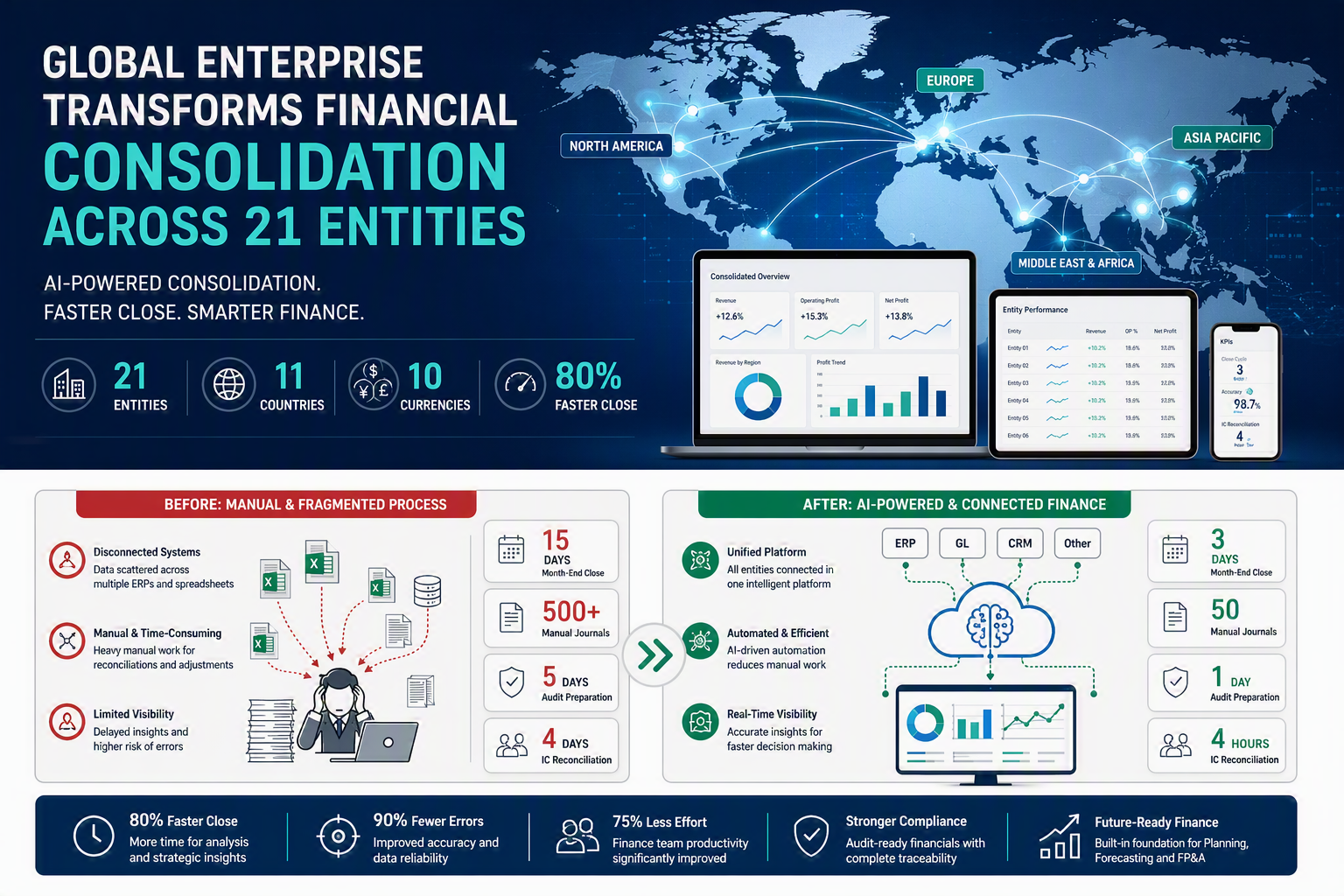
Global Enterprise Transforms Financial Consolidation and Reporting Across 21 Entities
As organizations expand across geographies, currencies, and legal structures, finance teams often find themselves spending more time gathering data than generating insights. How an AI-Powered Consolidation Framework Reduced Month-End Close by 80% and Established the Foundation for Modern FP&A
Read the Guide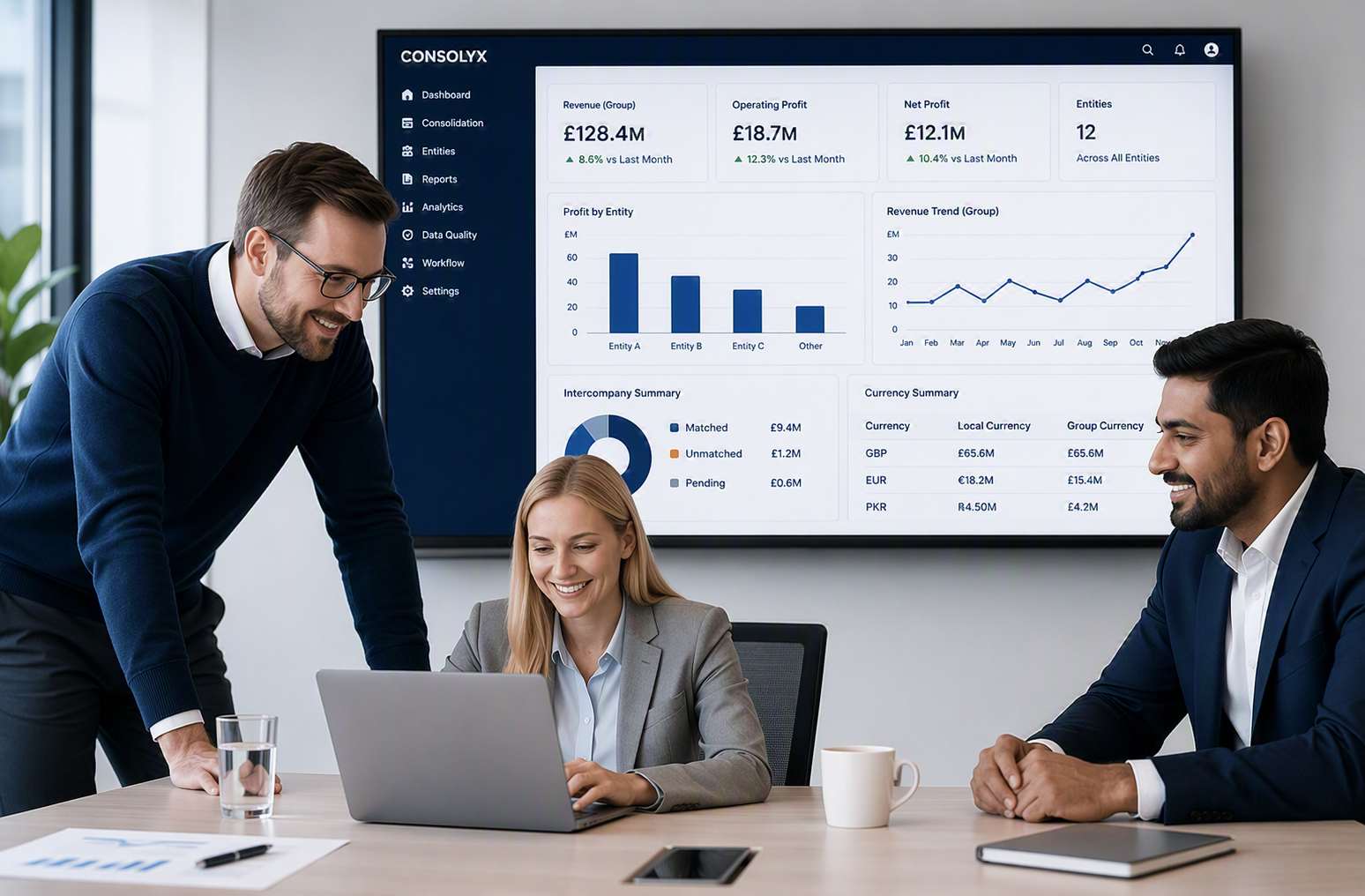
From Multiple Systems to One Intelligent Finance Platform: How CONSOLYX Transformed Group Reporting Across the UK, Ireland, and Pakistan
A multi-country business group operating across the globe by managing financial data through different systems, spreadsheets, and manual processes. As the group expanded, consolidation became increasingly complex—especially with multiple currencies, intercompany transactions, and fragmented reporting structures.
Read the Guide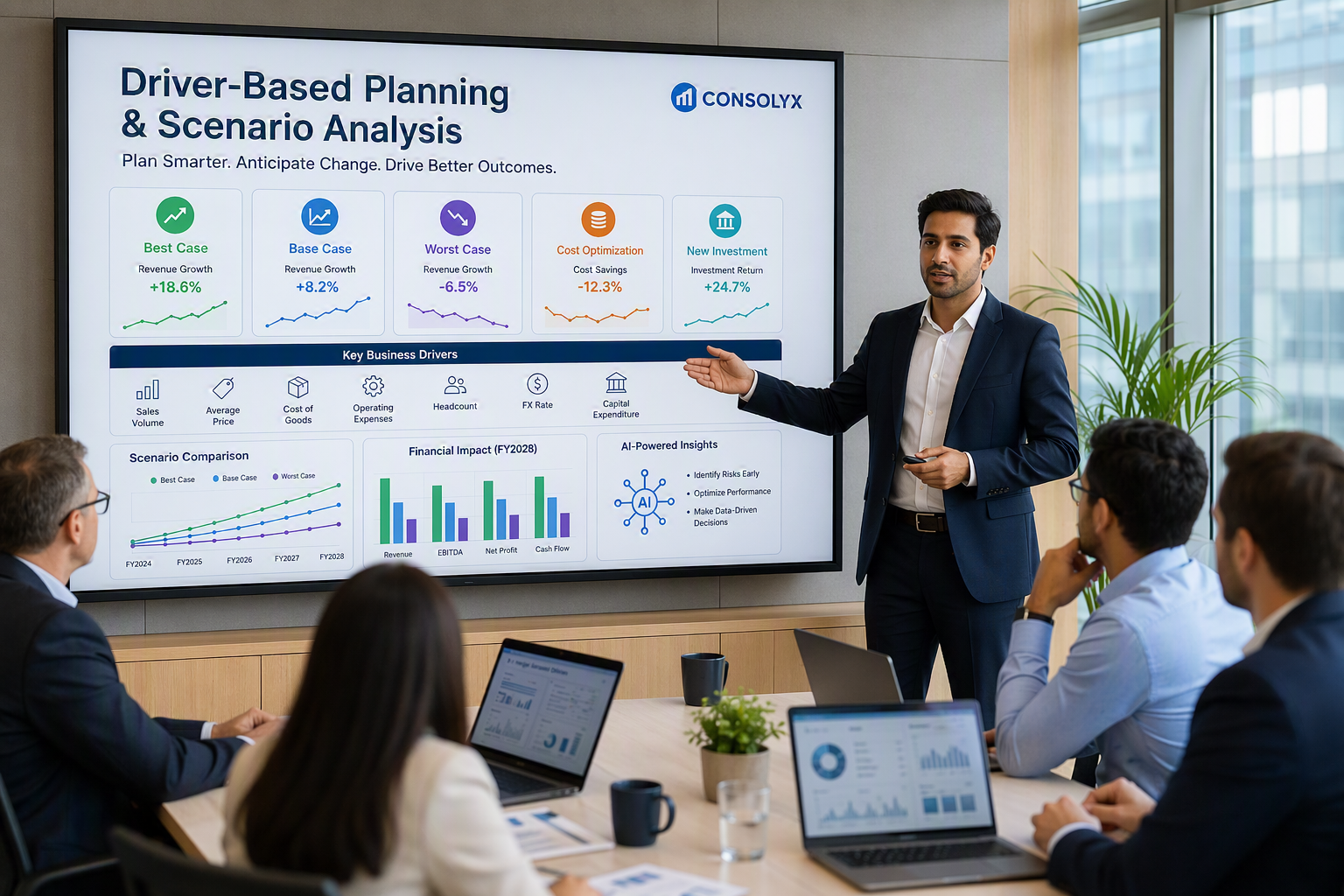
Driver-Based Planning & Scenario Analysis: How Modern Enterprises Improve Forecast Accuracy, Manage Risk, and Accelerate Growth
Traditional budgeting is no longer sufficient in today's volatile business environment. Discover how Driver-Based Planning and Scenario Analysis help enterprises evaluate uncertainty, test strategic decisions, improve forecast accuracy, optimize costs, and support sustainable growth through data-driven financial planning.
Read the Guide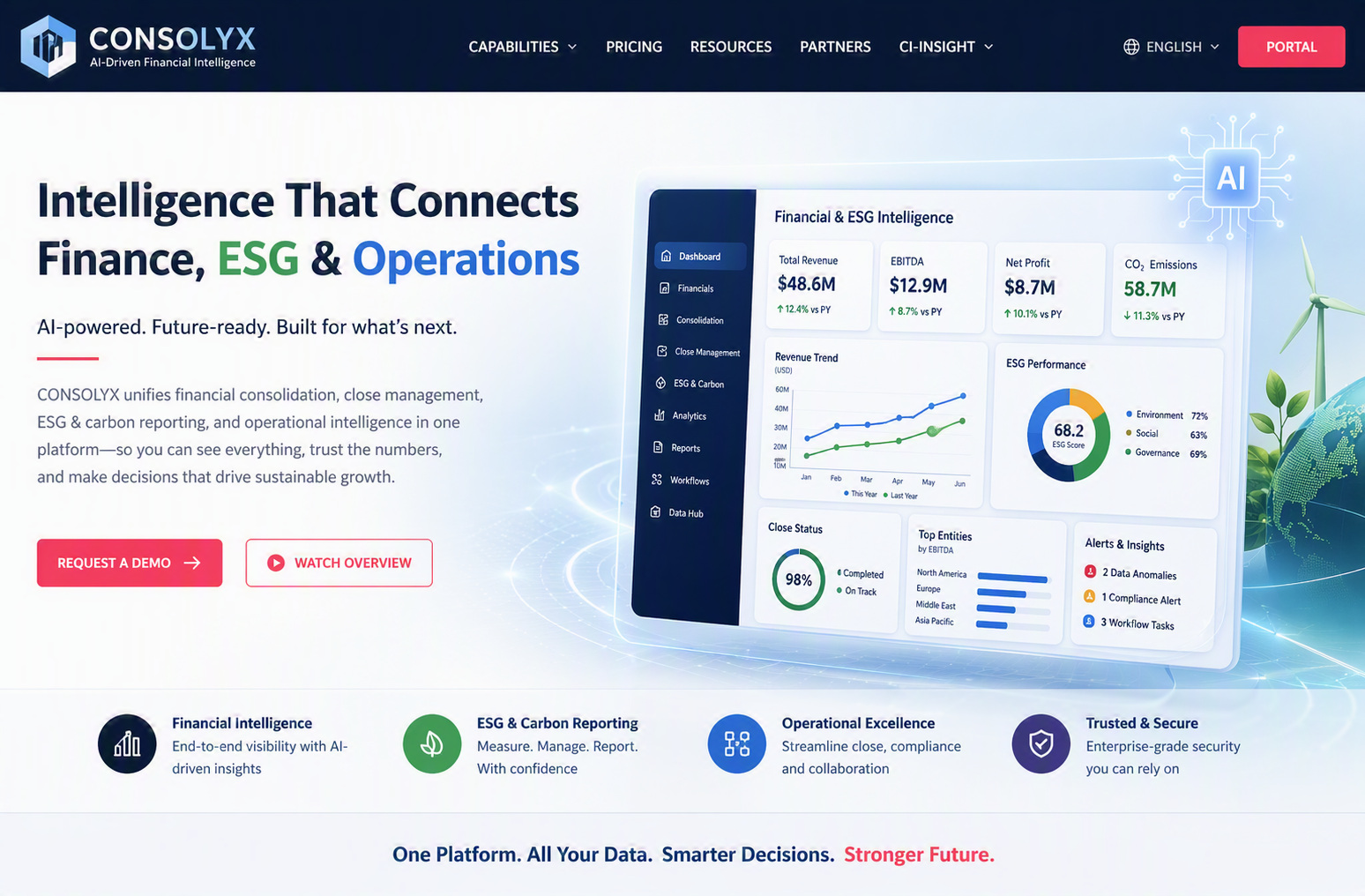
Why ESG Data Is Becoming Financial Data — And Why Modern Finance Teams Must Prepare Now
ESG is no longer a side conversation led only by sustainability teams. It is fast becoming part of core financial decision-making. This article explores why ESG data is evolving into financial data, how AI and finance intelligence are changing the reporting landscape, and what finance leaders must do now to build visibility, trust, and long-term business resilience.
Read the Guide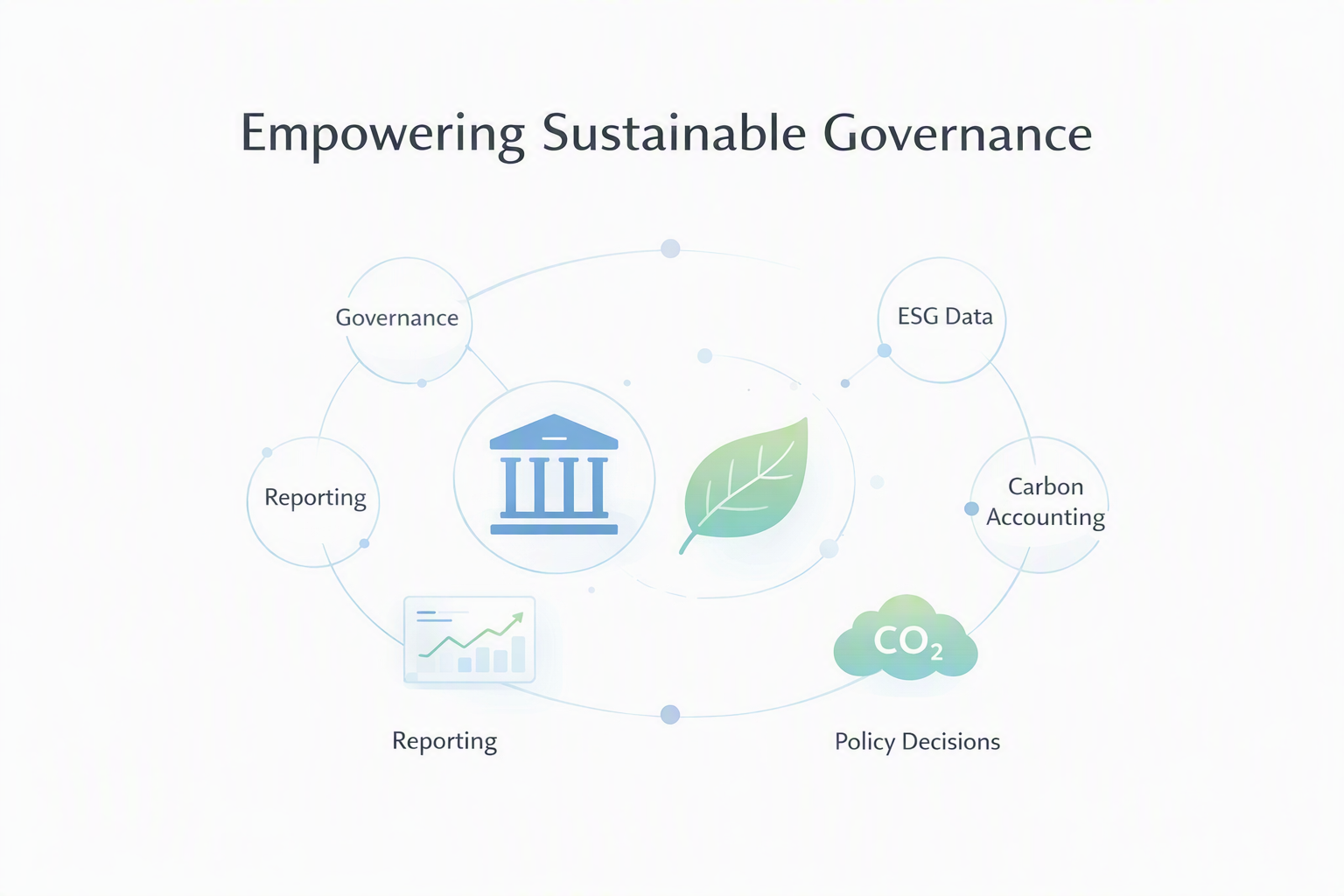
Building a National ESG and Carbon Monitoring Platform for Public Sector Facilities
A national public sector organization with 850+ facilities across 12 regions needed a cleaner way to manage ESG data, carbon accounting and sustainability reporting. Information existed, but it was fragmented across departments, spreadsheets, utility invoices and regional submissions.
Read the Guide
Why Carbon Accounting, AI and ESG Intelligence Platforms Are Becoming Boardroom Priorities
Carbon accounting has become a boardroom priority as investors, regulators, governments and customers demand reliable ESG information. Organizations now need auditable Scope 1, Scope 2 and Scope 3 data connected to climate risk, strategy and capital decisions. AI-powered ESG intelligence platforms help transform sustainability data into dashboards, insights, controls and action. CONSOLYX ESG brings carbon accounting, framework mapping, audit readiness, government monitoring and board reporting.
Read the Guide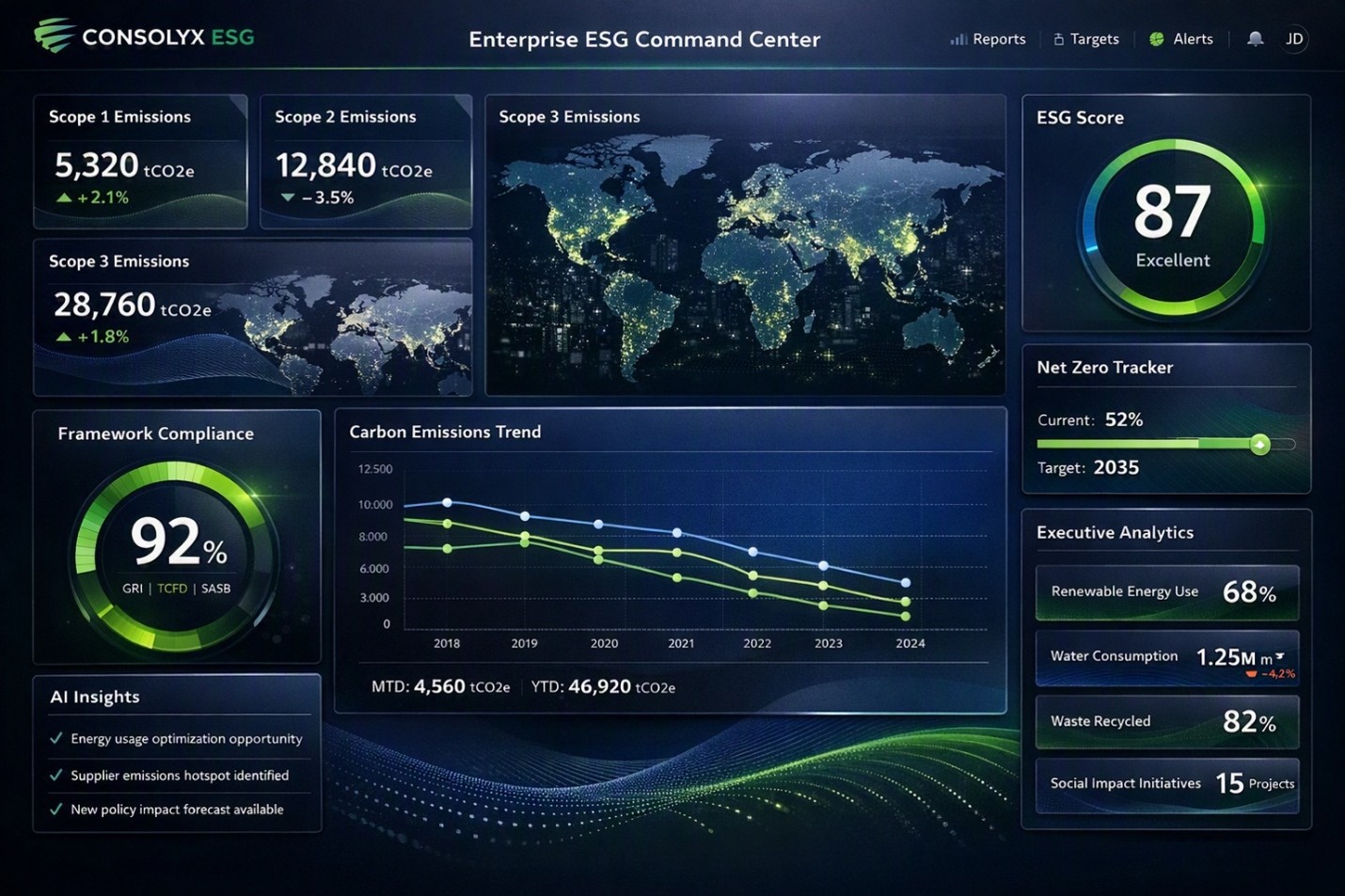
ESG Reporting Is Becoming a Finance-Grade Control System | CONSOLYX ESG, Carbon & Sustainability Intelligence Platform
ESG reporting is shifting from voluntary sustainability disclosure to a controlled enterprise reporting discipline. Investors, regulators, governments, boards, lenders, and customers increasingly expect ESG data to be reliable, traceable, comparable, and decision-useful. Organizations now need ESG platforms that connect carbon accounting, framework mapping, audit trails, dashboards, AI insights, FP&A, risk management, and board reporting. CONSOLYX ESG is positioned as an enterprise-grade sustain
Read the Guide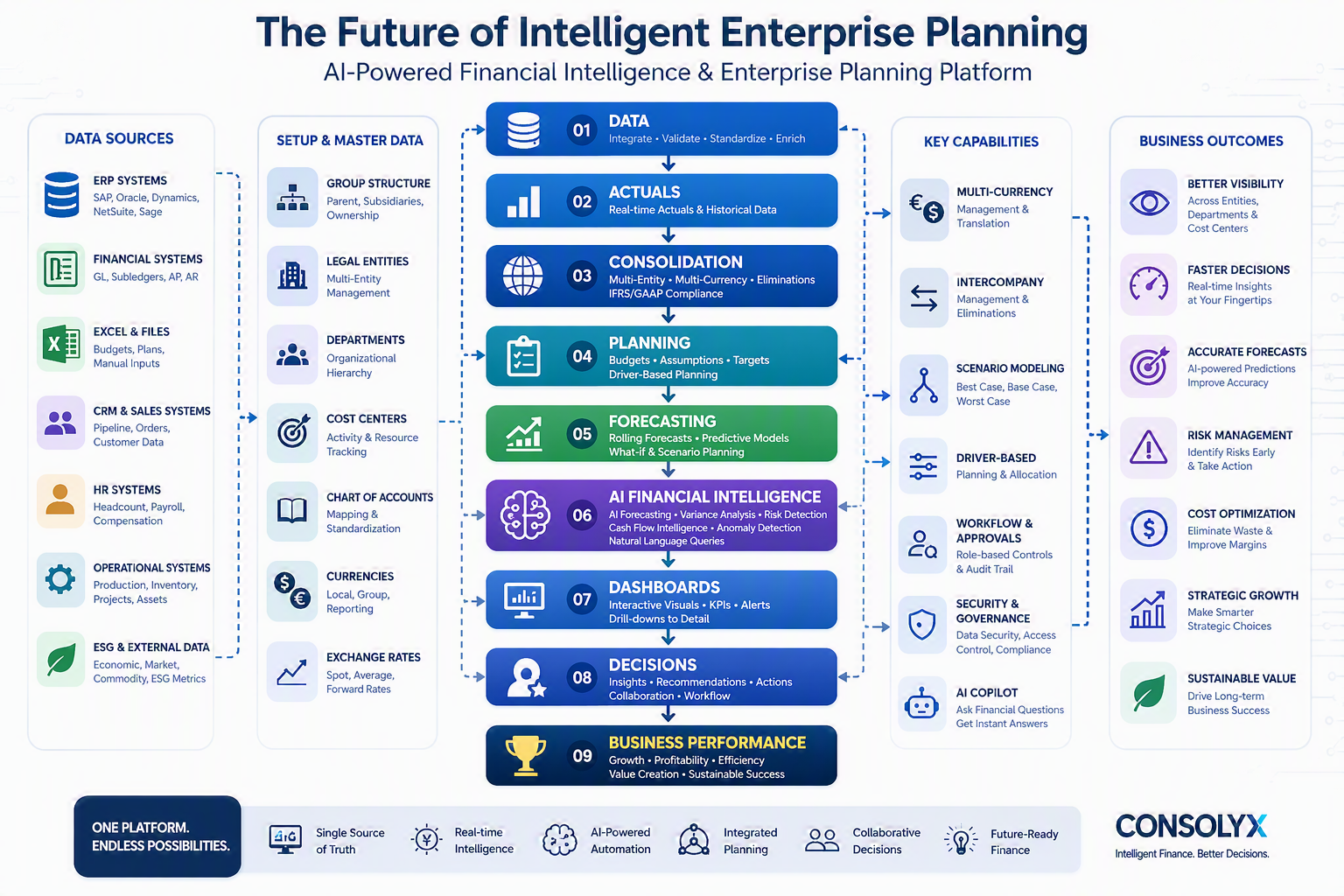
The Future of FP&A: How AI, Connected Planning, and Financial Intelligence Are Redefining Enterprise Performance
Not long ago, finance teams spent most of their time explaining the past. Month-end reports were prepared, variances were analyzed, budgets were reviewed, and management meetings focused on understanding what had already happened. The finance function was largely viewed as the organization’s scorekeeper—a critical role, but one that was often reactive rather than strategic.
Read the Guide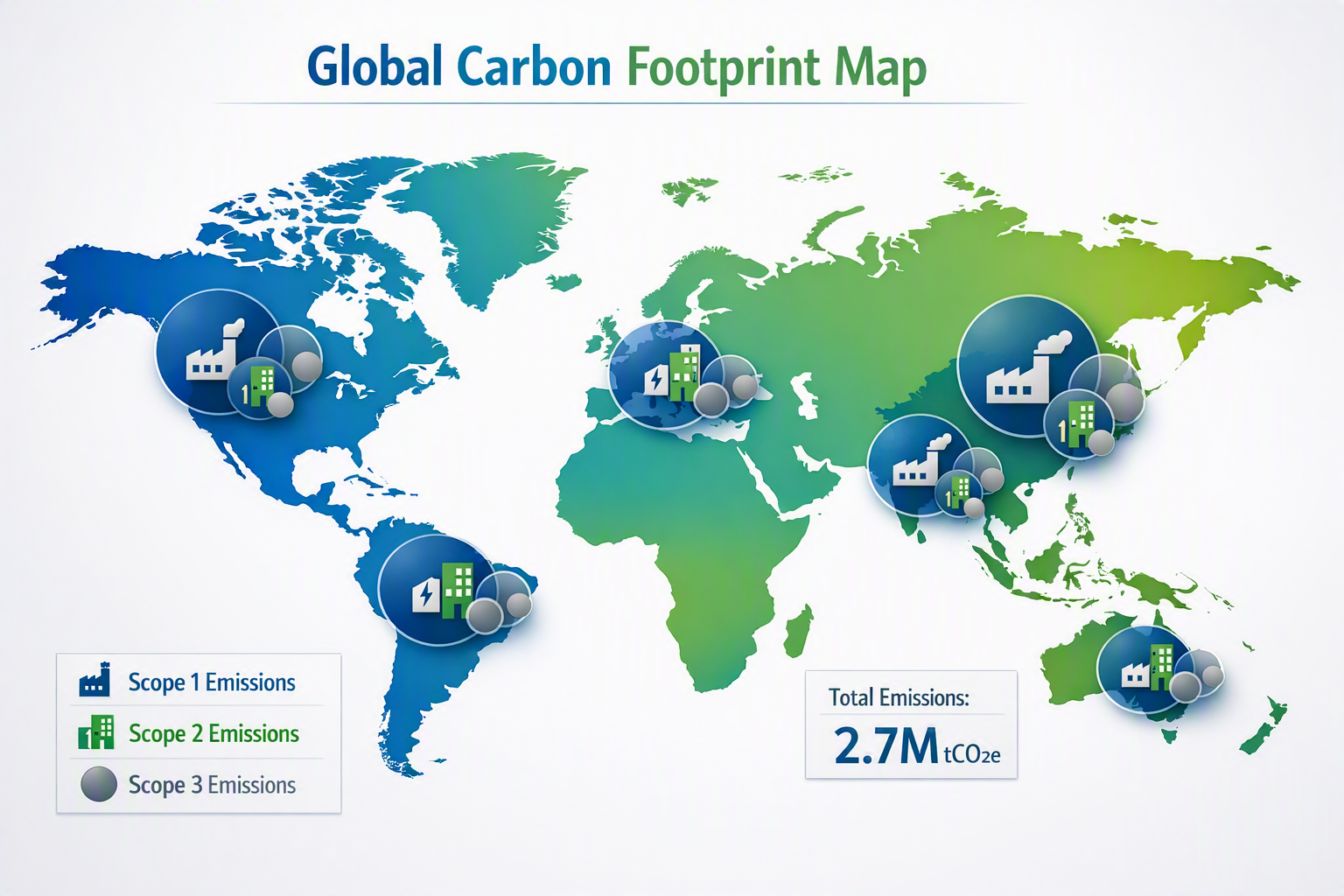
Transforming ESG and Carbon Reporting Across a Multi-Entity Enterprise Group
How a diversified holding company used CONSOLYX as an Enterprise Sustainability Intelligence Platform to centralize carbon accounting, ESG performance management, executive dashboards and investor-ready sustainability reporting across countries, subsidiaries and facilities.
Read the Guide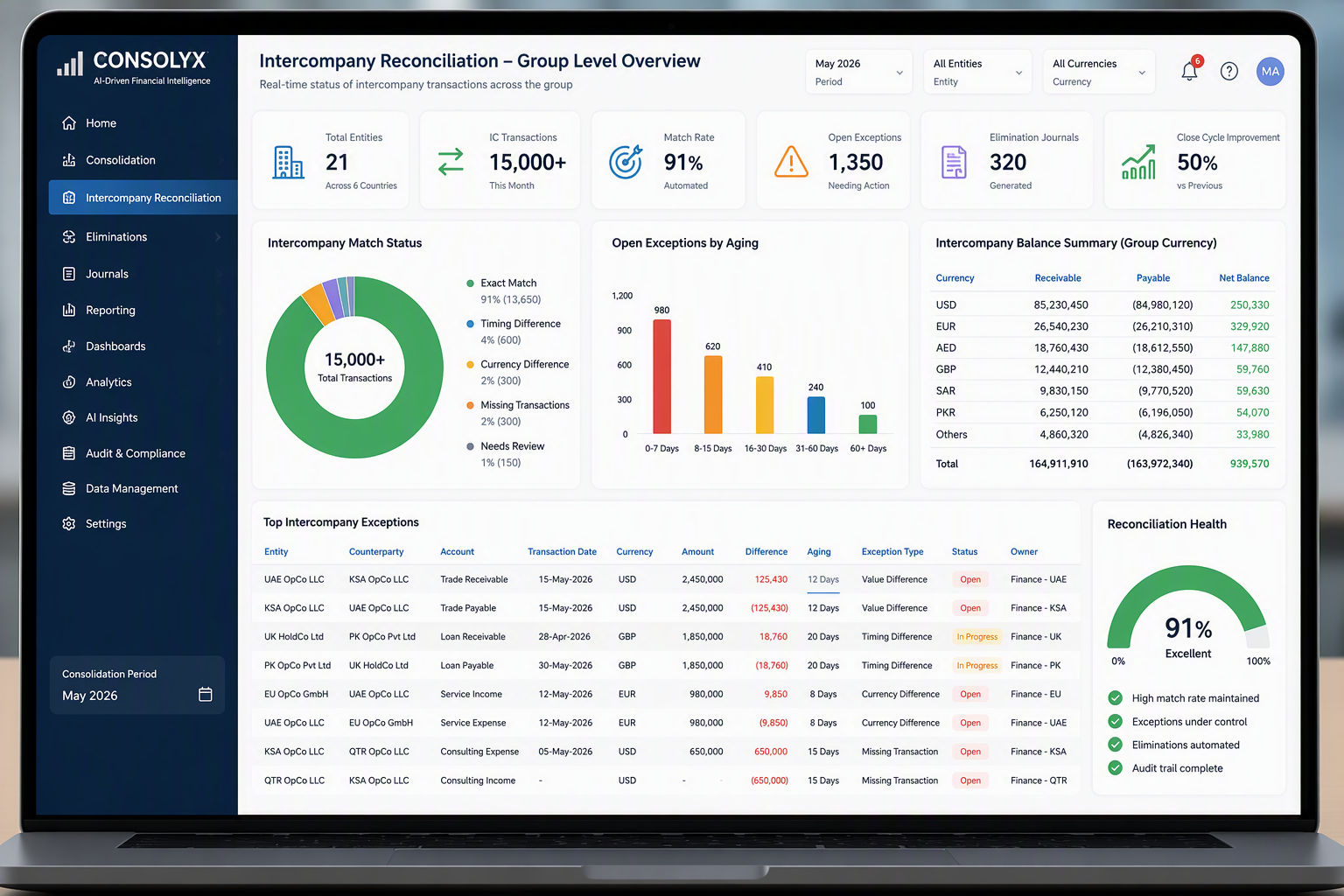
Intercompany Reconciliation & Elimination Automation
Intercompany reconciliation has become a recurring financial close constraint for a multi-country group operating across 6 countries, 21 entities, 7 currencies, and more than 15,000 monthly intercompany transactions. Timing differences, foreign exchange movements, missing counterpart entries, and manual follow-up delayed month-end close activities and reduced confidence in consolidated numbers.
Read the Guide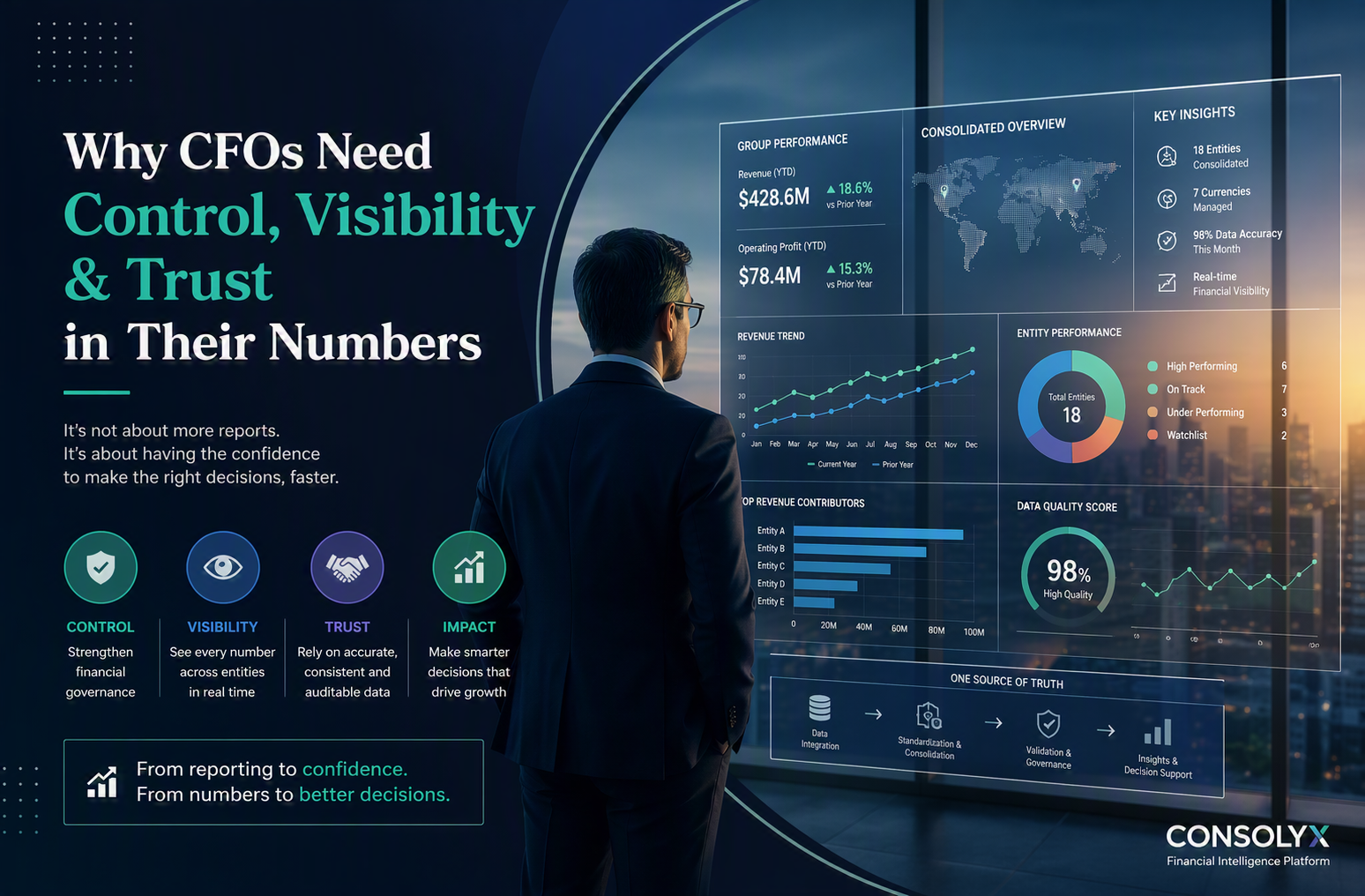
Why CFOs Need Control, Visibility, and Trust in Their Numbers — Not More Reports
Finance teams are producing more reports than ever, yet many leaders still struggle with delayed insights, disconnected data, and low confidence in the numbers. This article explores why modern CFOs need more than dashboards — they need financial control, real-time visibility, and trust in their data to make faster, better decisions across the business.
Read the Guide
Building an AI-Powered FP&A and Scenario Planning Platform for a Multi-Entity Enterprise Group
How CONSOLYX helped a diversified enterprise group move from spreadsheet-based budgeting to connected planning, driver-based forecasting, scenario modeling and board-level decision intelligence.
Read the Guide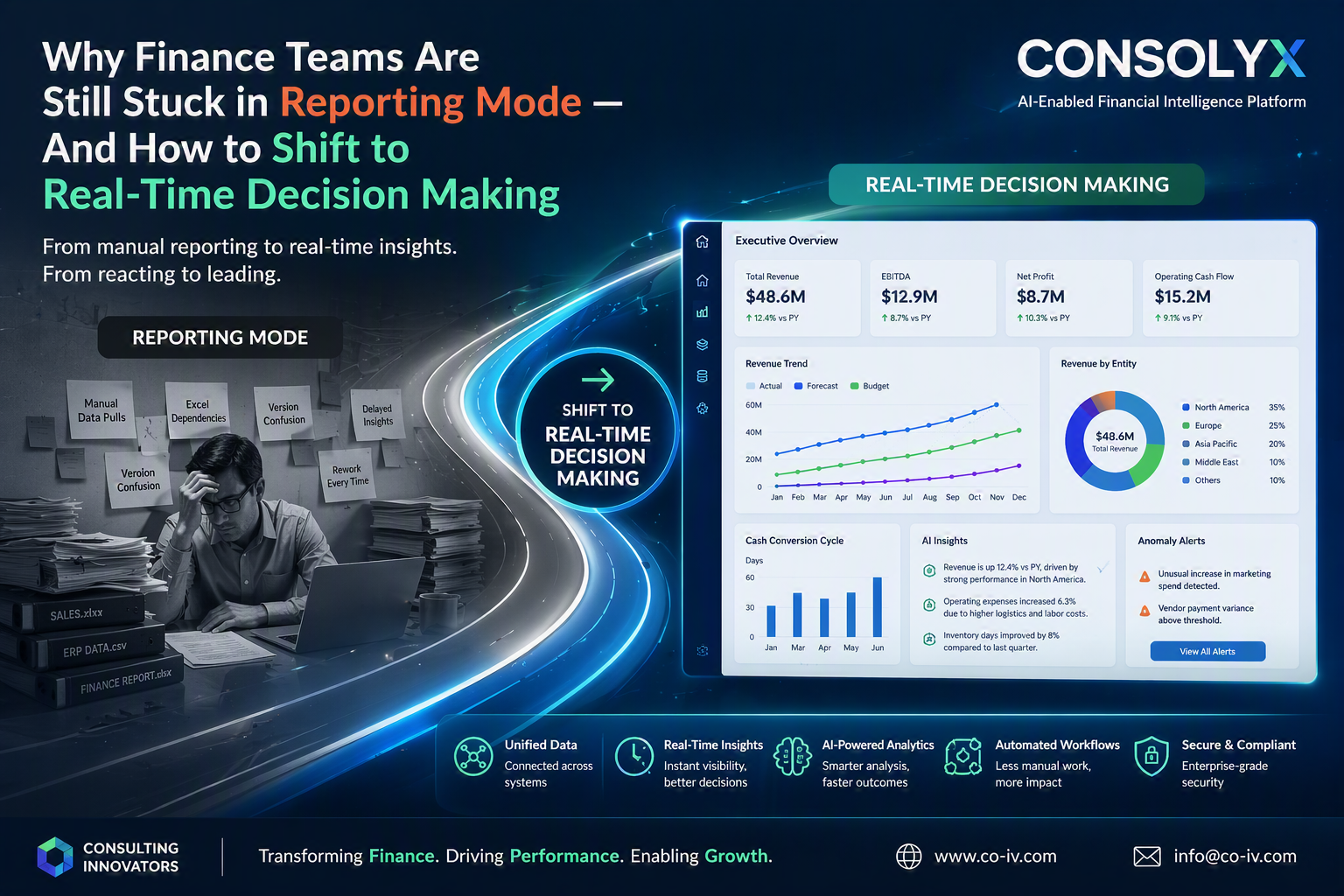
Why Finance Teams Are Still Stuck in Reporting Mode — And How to Shift to Real-Time Decision Making
Finance teams are working harder than ever, yet many remain stuck in manual reporting processes. This article explores why reporting mode still dominates and how organizations can move toward real-time, insight-driven decision making through better data, workflows, and AI-enabled systems.
Read the Guide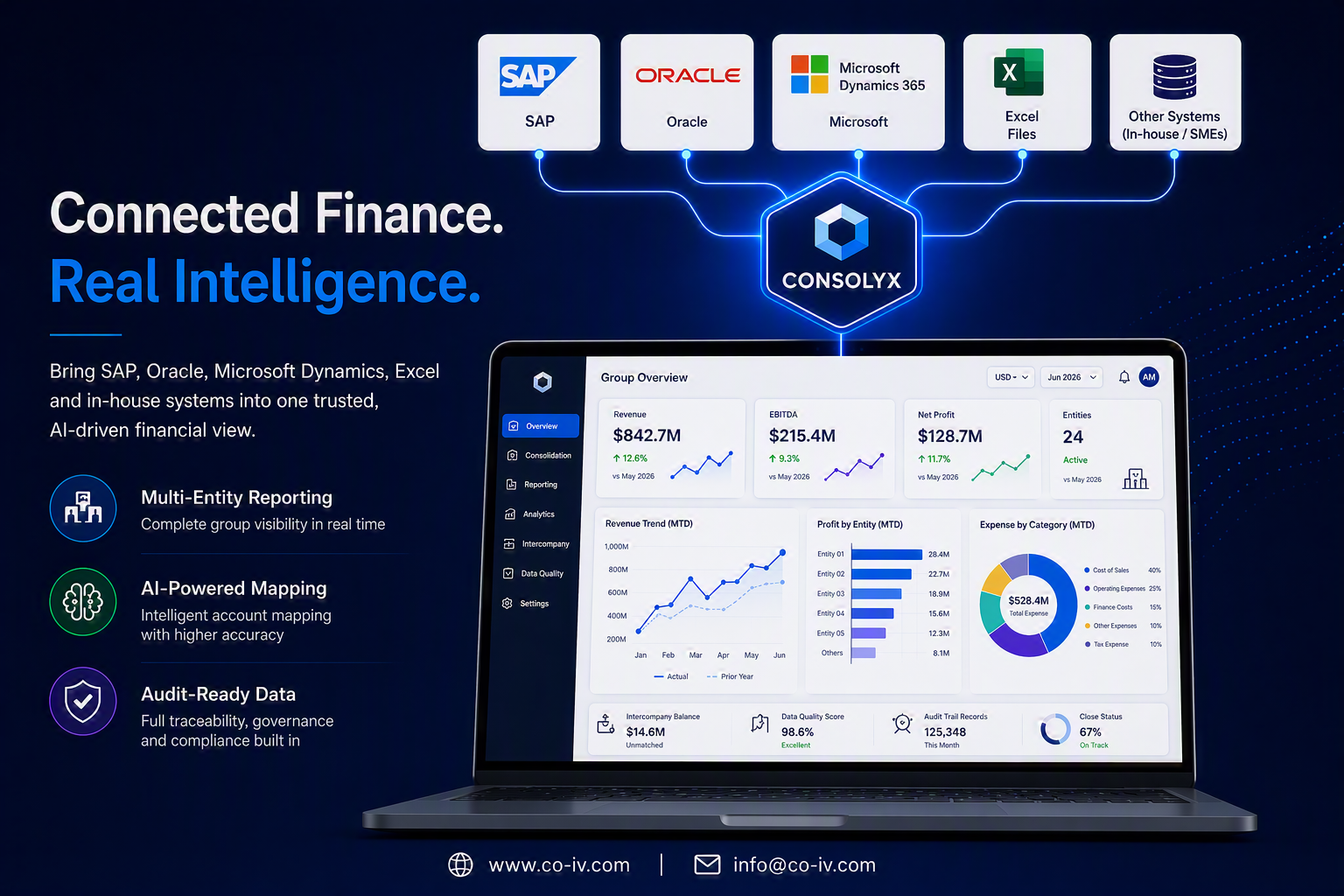
If We Already Have ERP Systems, Why Do We Need a Financial Intelligence Platform?
Many organizations already use SAP, Oracle, and Microsoft Dynamics — so why build another platform? This article explains why financial intelligence platforms are not replacements, but essential layers that bring control, visibility, AI-driven mapping, and audit-ready reporting across multi-entity environments.
Read the Guide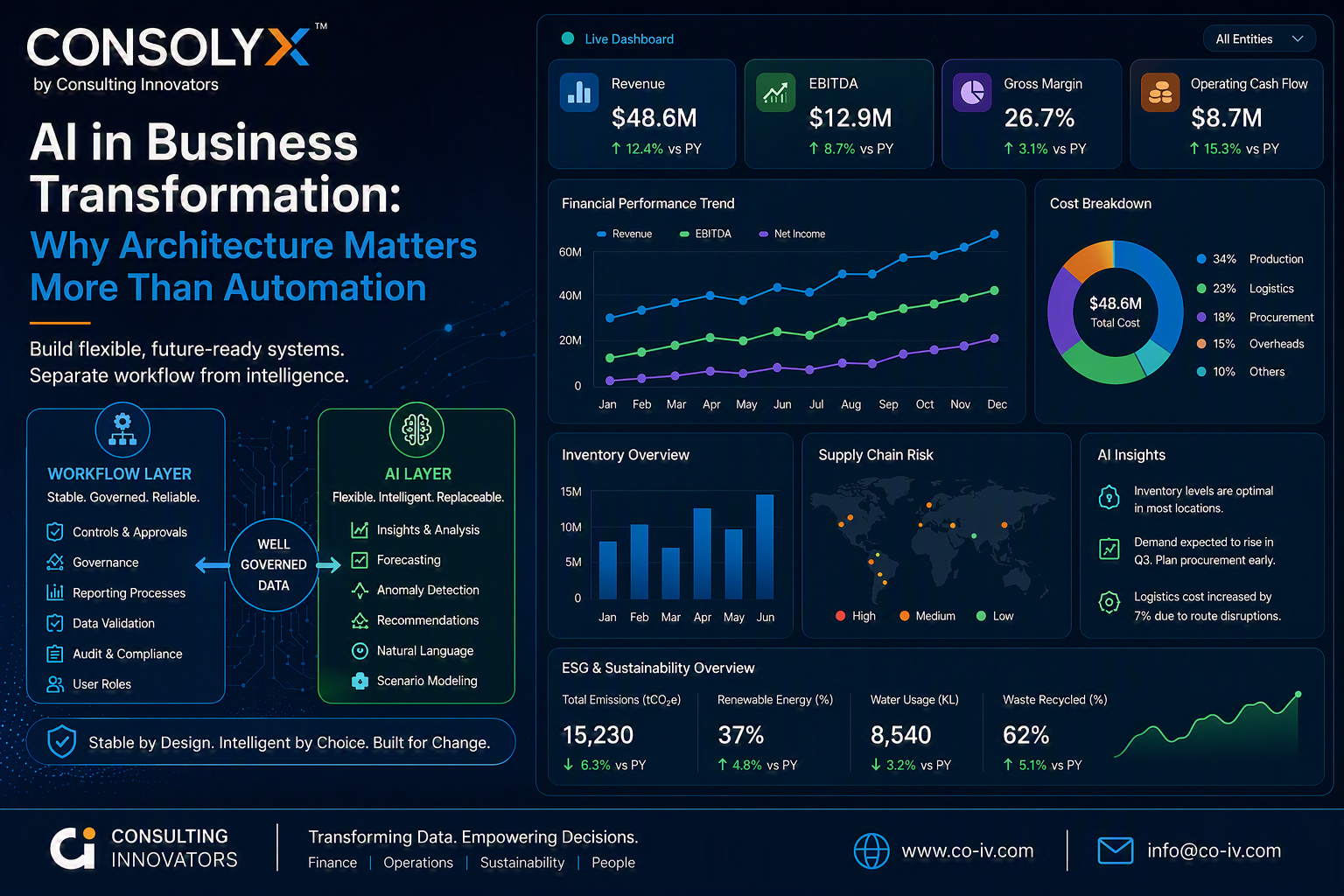
AI in Business Transformation: Why Architecture Matters More Than Automation
AI adoption is accelerating, but many organizations are asking the wrong question. The real challenge is not how to implement AI, but how to design systems that remain flexible as models evolve. This article explores how separating business workflows from AI layers can prevent lock-in and enable scalable, future-ready transformation.
Read the Guide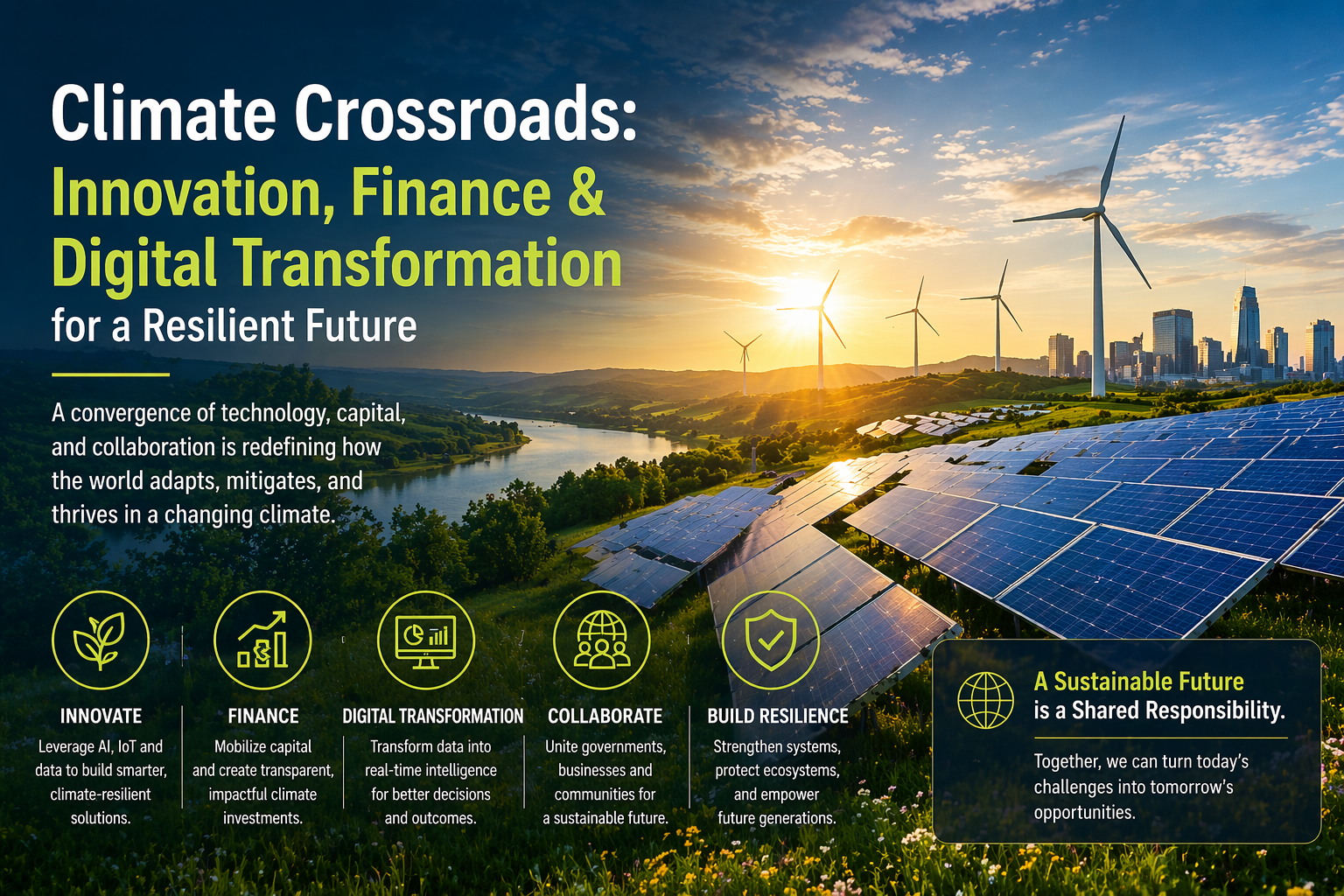
Climate Crossroads: Innovation, Finance & Digital Transformation for a Resilient Future
Across the globe, climate-related disasters are becoming more frequent, more intense, and more disruptive. From widespread flooding and extreme heatwaves to wildfires and rising sea levels, nations, enterprises, and financial systems are facing unprecedented environmental and economic pressures.
Read the Guide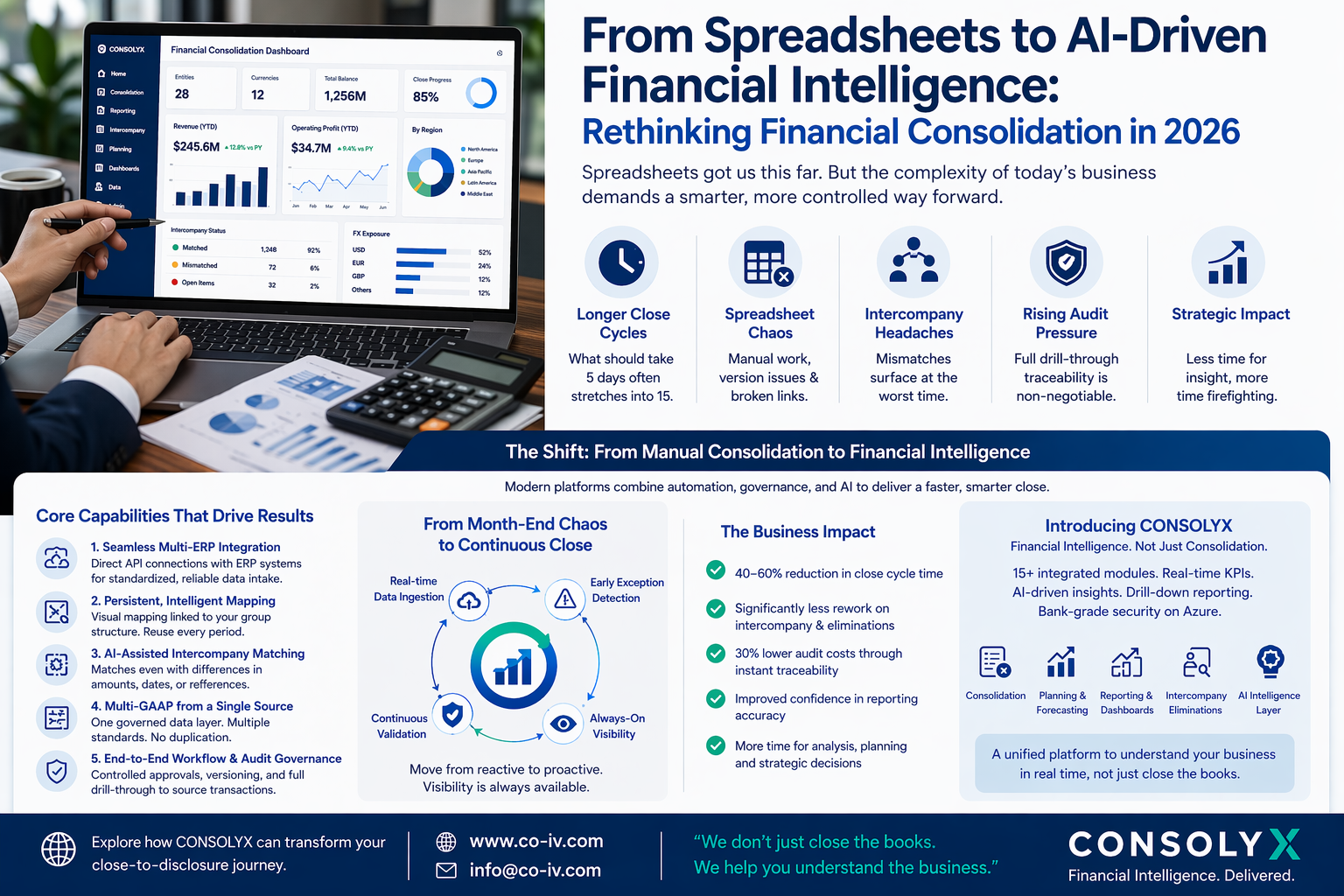
From Spreadsheets to Financial Intelligence, Why CFOs Are Rethinking Consolidation in 2026.
Financial consolidation is no longer just about closing the books — it’s about gaining real-time control over complex, multi-entity operations. As businesses scale across systems, currencies, and reporting frameworks, spreadsheet-based processes are becoming increasingly fragile and inefficient. Leading finance teams are now adopting AI-powered platforms to automate workflows, improve accuracy, and ensure full traceability.
Read the Guide